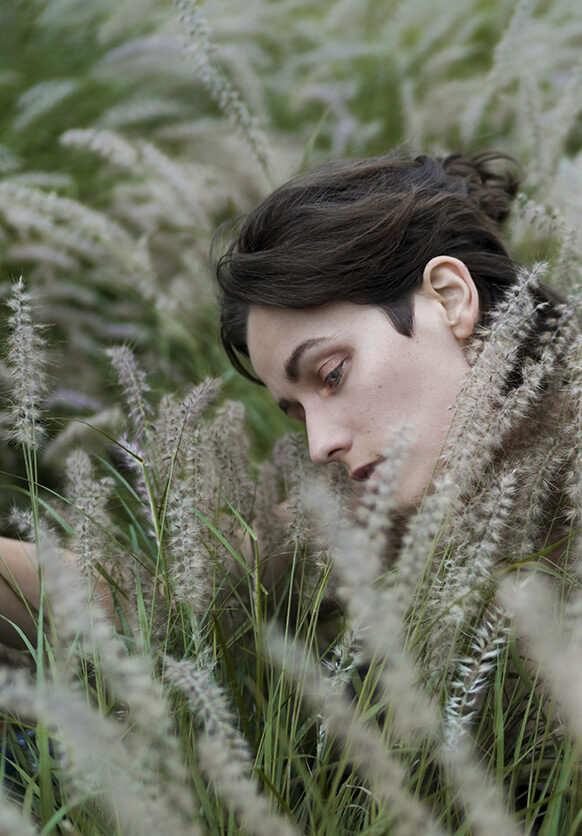
New Light, New Horizons
Sandra Hallnor
Mid-winter festivals and celebrations are as old as mankind itself, recognising the darkest days in the year and welcoming the return of the sun. In Scandinavia, one of those pageants is called Santa Lucia’s Day, commemorating Lucia of Syracuse, who brought aid to Christians hiding in the Roman catacombs. Though celebrated since the fourth century AD, the desire to bring light to the darkness is far older.
The festival and those like it are among Sandra Hallnor’s longest-running inspirations. “I’ve always been fascinated by legends, myths, traditions and superstitions,” she says, “and there are a lot of them in Lapland, my home. In my portraits, I always like to be imaginative in creative projects like this one. The enjoyment comes from playing with a theme or a historical idea and putting my own interpretation on it. It makes everything from planning to shooting incredibly rewarding and meaningful.”
“Lucia is a character I’ve experimented with before,” she continues. “She wore a candle-lit wreath on her head to light her way, leaving both her hands free to carry as much food as possible. Her name comes from ‘light’ and she’s a bringer of joy in dark times, so the pictures should glow with hopeful feelings. In the past I’ve made images of Lucia in the snow of Lapland, but this time I was inspired to create a more green and grounded feeling, so the photos were made on the isle of Madeira.”
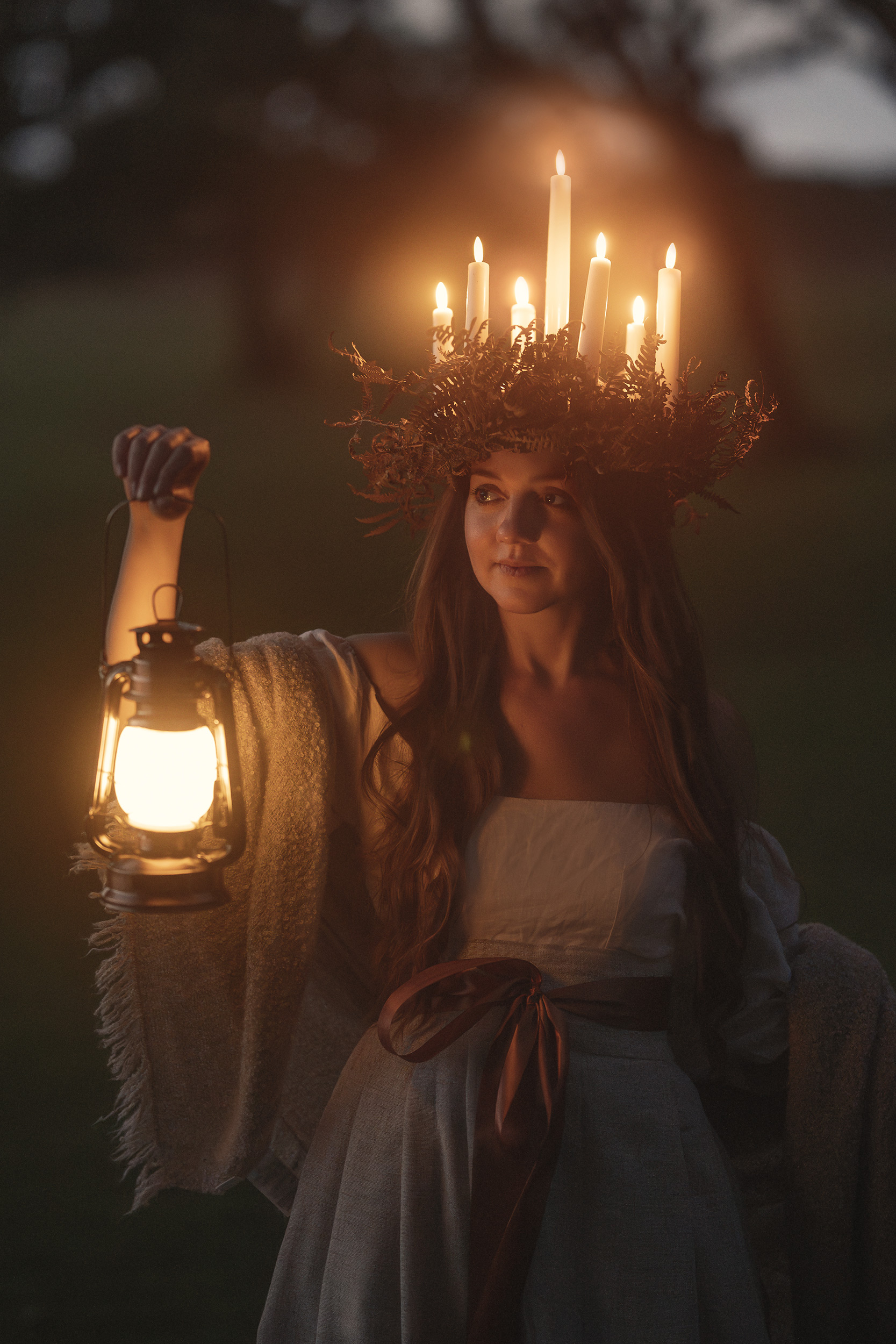 © Sandra Hallnor | Sony α7 IV + FE 85mm f/1.4 GM II | 1/100s @ f/1.4, ISO 2000
Part of Sandra’s unique approach is to make her own props and costumes, so she created her model’s skirt and headdress, bringing them to the island with her. “Besides,” she jokes, “you can’t just pick up a Lucia crown in any old shop!” She also made a wreath from local dried ferns to incorporate the Madeiran surroundings.
This time, Sandra made the crown using electric candles, for two reasons. “It’s a very windy place,” she notes, “so it’s difficult to keep them lit, and obviously fire doesn’t mix well with a wreath made of dried ferns. The lantern though is a proper flame, and along with the crown, it’s the only lighting I used.”
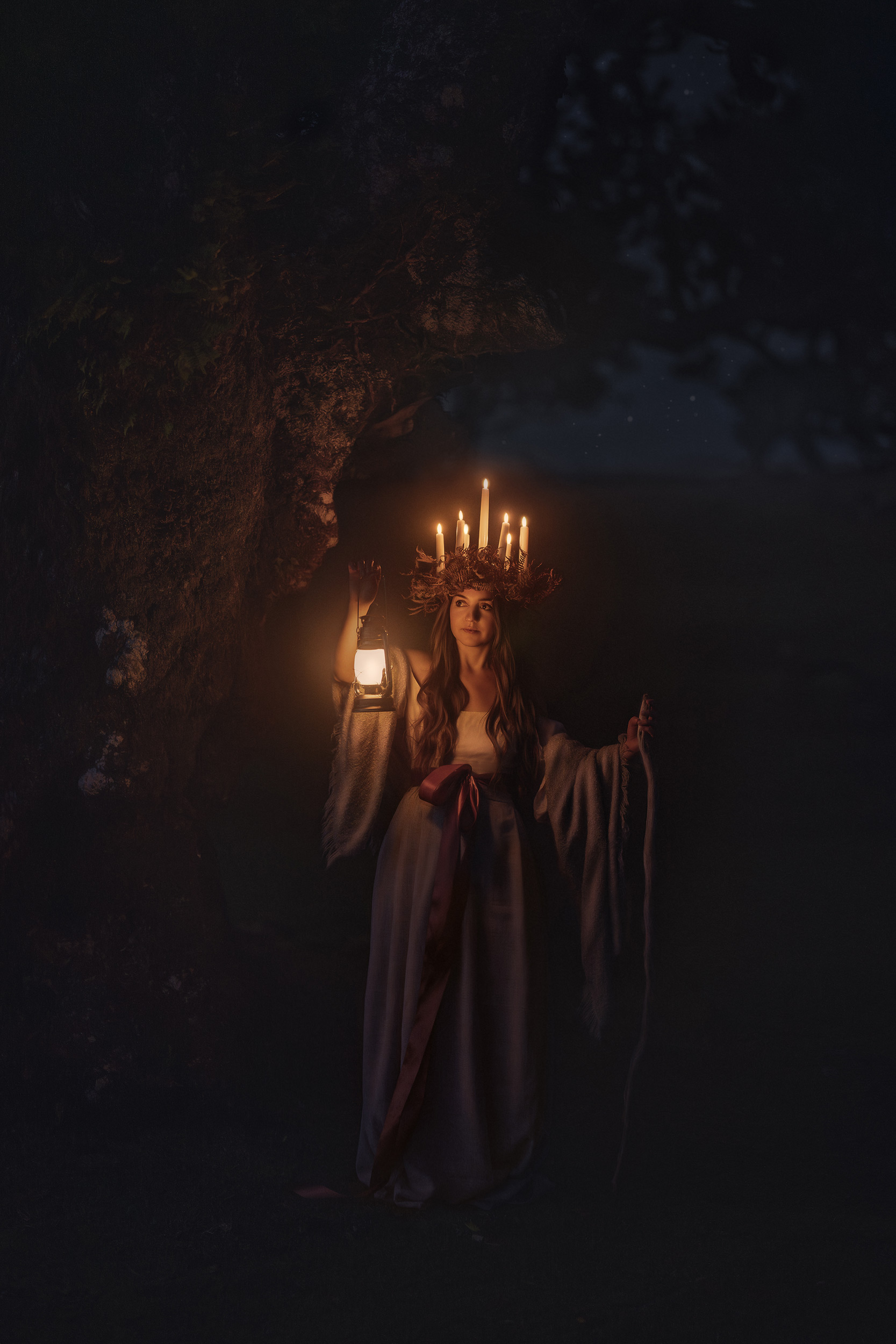 © Sandra Hallnor | Sony α7 IV + FE 85mm f/1.4 GM II | 1/100s @ f/1.4, ISO 2000
Shooting in the blue hour, something that Sandra does often, also gave prominence to those lights. “What I like to do in these low-light portraits, is face the subject toward the horizon where the sun had just gone down, then expose for the lamp light that’s touching her face,” she elaborates. “And if you time it right, there’s still plenty of natural light to pick out the location. For instance here I want that twisted, fairytale forest background to be very much part of the story.”
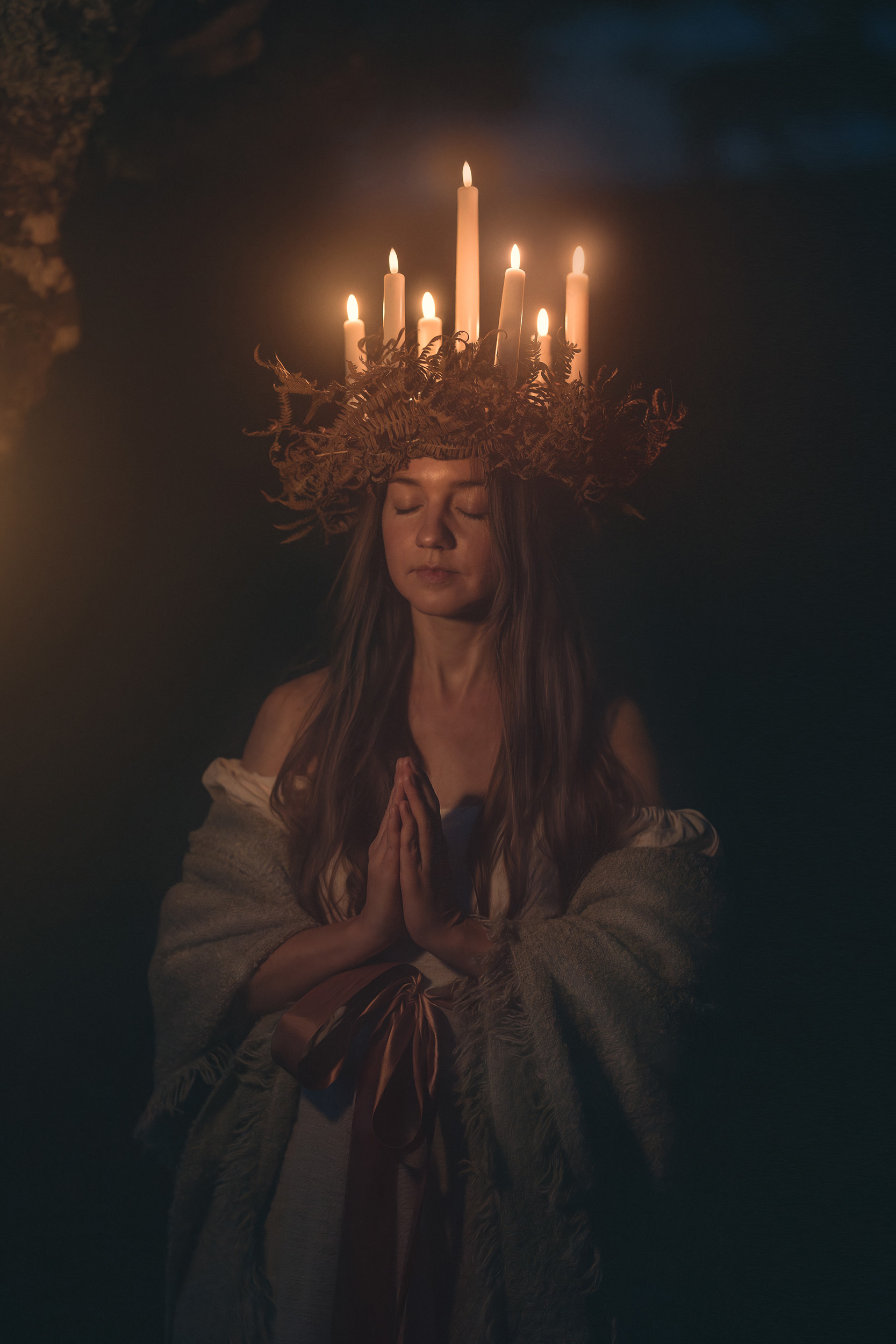 © Sandra Hallnor | Sony α7 IV + FE 85mm f/1.4 GM II | 1/200s @ f/1.4, ISO 2500
To get the exposure just right using her Sony Alpha 7 IV, she linked her metering mode to the AF point, “so when the latter automatically locks onto the subject’s eye, it gets the look I want,” she explains. “I also use the camera’s highlight warnings – the ‘Zebras’ – through the viewfinder, and adjust the exposure if needed, so that I know the face and other highlights are bright, but not burning out.”
In low-light conditions, Sandra makes the most of the Alpha 7 IV’s ISO performance and Steady Shot Inside image stabilisation. “Even though I can ask my Lucia to keep still, I don’t want to be working at shutter speeds of less than 1/100sec or thereabouts,” says Sandra, “but I know that the camera is virtually noise free at speeds like ISO 2000 that I used in some of these shots. The brilliant dynamic range of the sensor is very important as well, as it helps keep detail in the shadowy background.”
“Plus,” she continues, “I always use the camera's fastest frame rates when working with fire. Because of the way it moves, it isn’t always flattering, but at 10 frames per second, I can pick the best looking shots!”
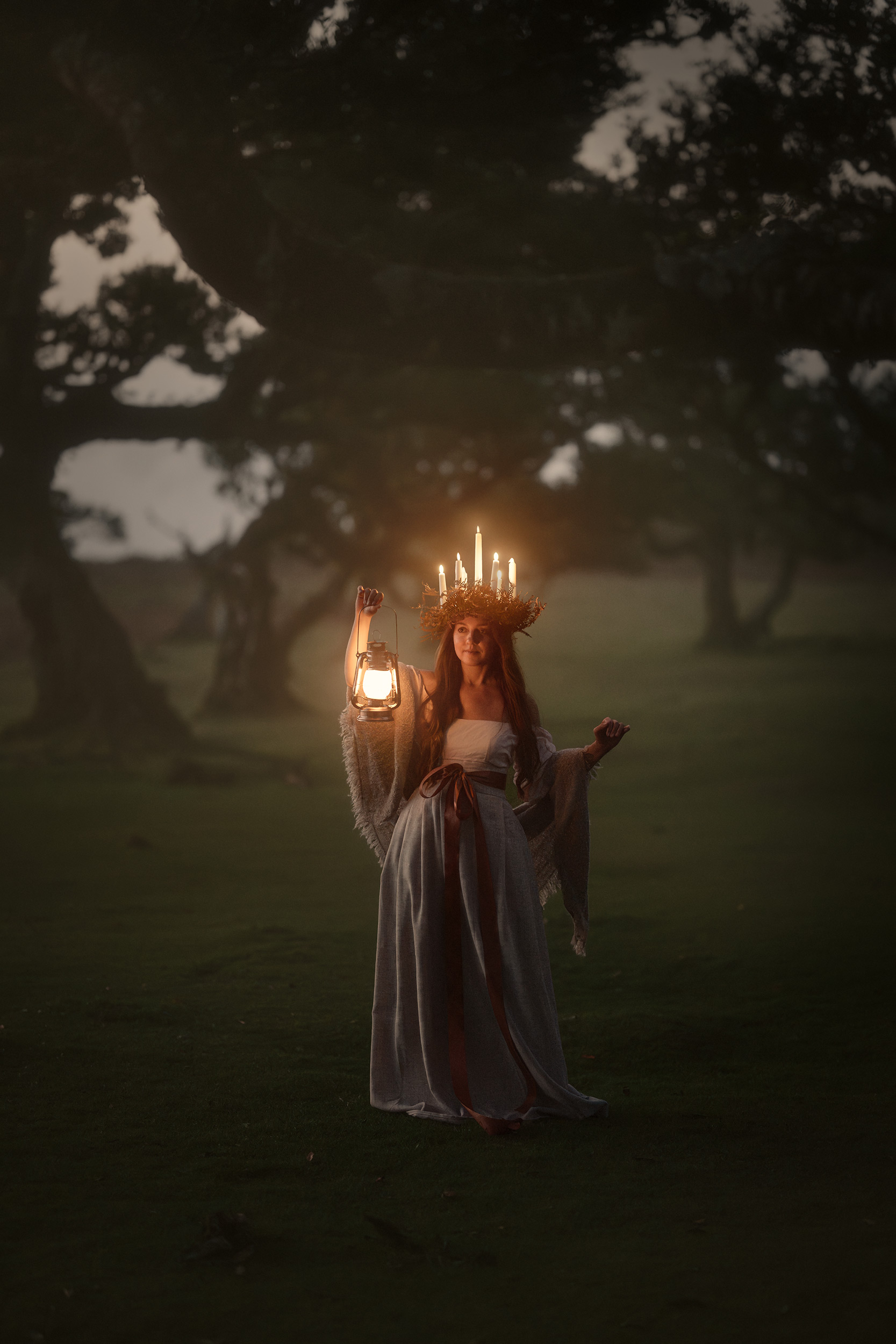 © Sandra Hallnor | Sony α7 IV + FE 85mm f/1.4 GM II | 1/100s @ f/1.4, ISO 2000
Maybe most of all, Sandra relied on her FE 85mm f/1.4 GM II lens for these images. “It’s a wonderful lens for these kinds of images,” she says, “with the softness it gives in the background and its maximum aperture is perfect for low-light. It’s also about the focal length. This a classic lens for framing head-and-shoulders, but when you use it full length, it keeps a real sense of place.”
For Sandra, Lucia is a recurring project. “It’s a subject I love to revisit every year,” she finishes, “and each time I want to do it in a slightly different way, something I definitely recommend. We all want to do new things, but not being afraid to return and refine is invaluable. As well as being fun and inspiring, that’s how you make something truly your own.”
Featured products


Sandra Hallnor | Sweden
"Keep your passion playful, fresh and fun."