Arctic Conservation
Arturo de Frías
Every time he visits Svalbard, award-winning wildlife photographer Arturo de Frías gets the same familiar feelings. There is the usual sense of wonder and excitement at the extreme beauty of this Arctic Archipelago, and a fascination for the species that call it home. But increasingly there is also something else. “It’s a feeling of loss,” he says, “because the fate of this place and its wildlife is hanging in such a delicate balance.”
A veteran of over 20 trips to the Arctic, and hundreds more all around the world shooting endangered species both above and below the waves, Arturo has seen his fair share of amazing wildlife, but there’s one subject he’s always drawn back to: polar bears. It’s no coincidence that they are also one of the species most obviously at risk. “It was the bears which first sent me down the path of trying to make a difference in the fields of ecology and climate change,” he explains, “and to this day they have the same effect on me. Every encounter is special, but some stand out, and I think that photography which encapsulates those moments can have a genuine effect on how people view the world.”
 © Arturo de Frías | Sony α1 + FE 200-600mm f/5.6-6.3 G OSS | 1/2500s @ f/6.3, ISO 800
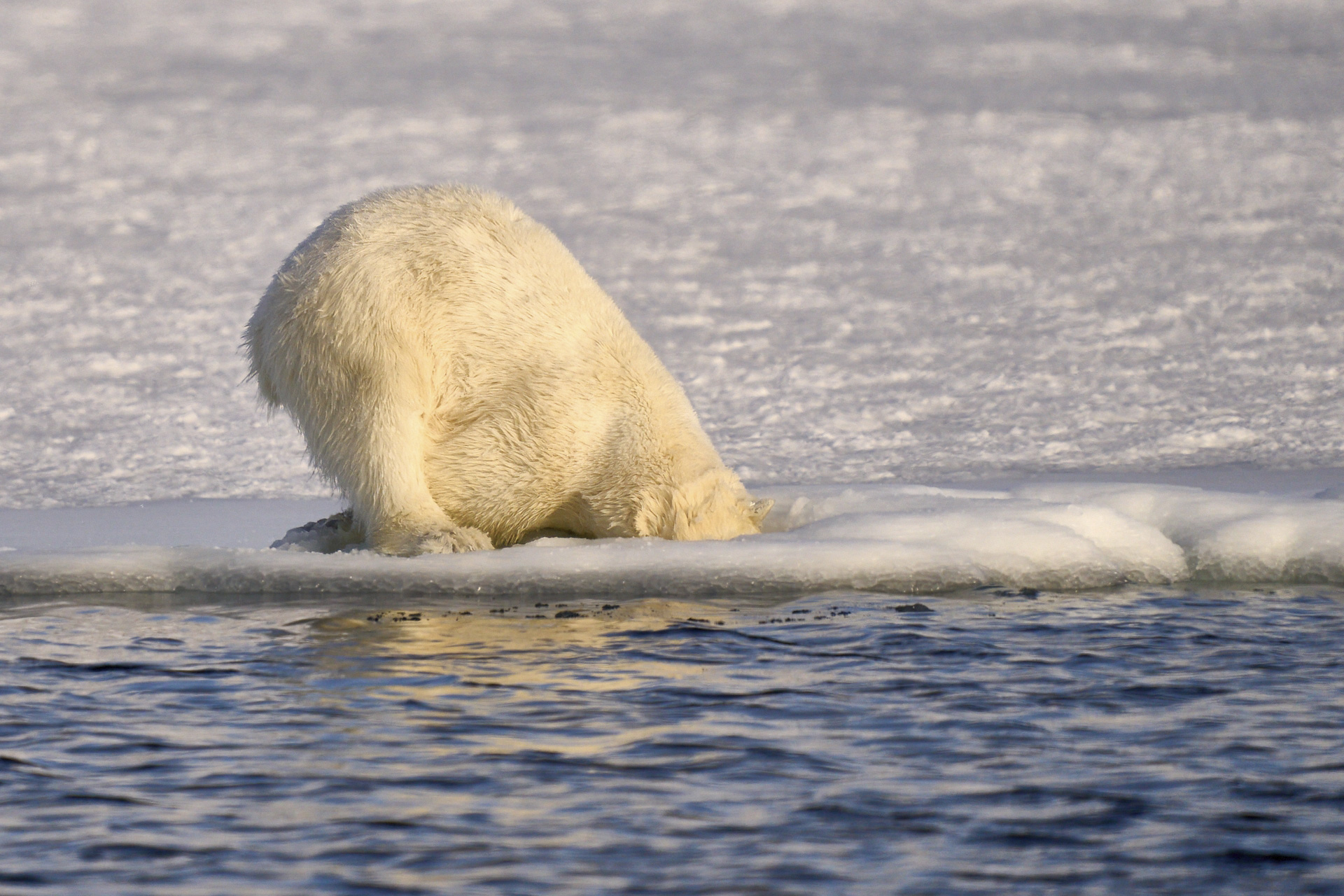
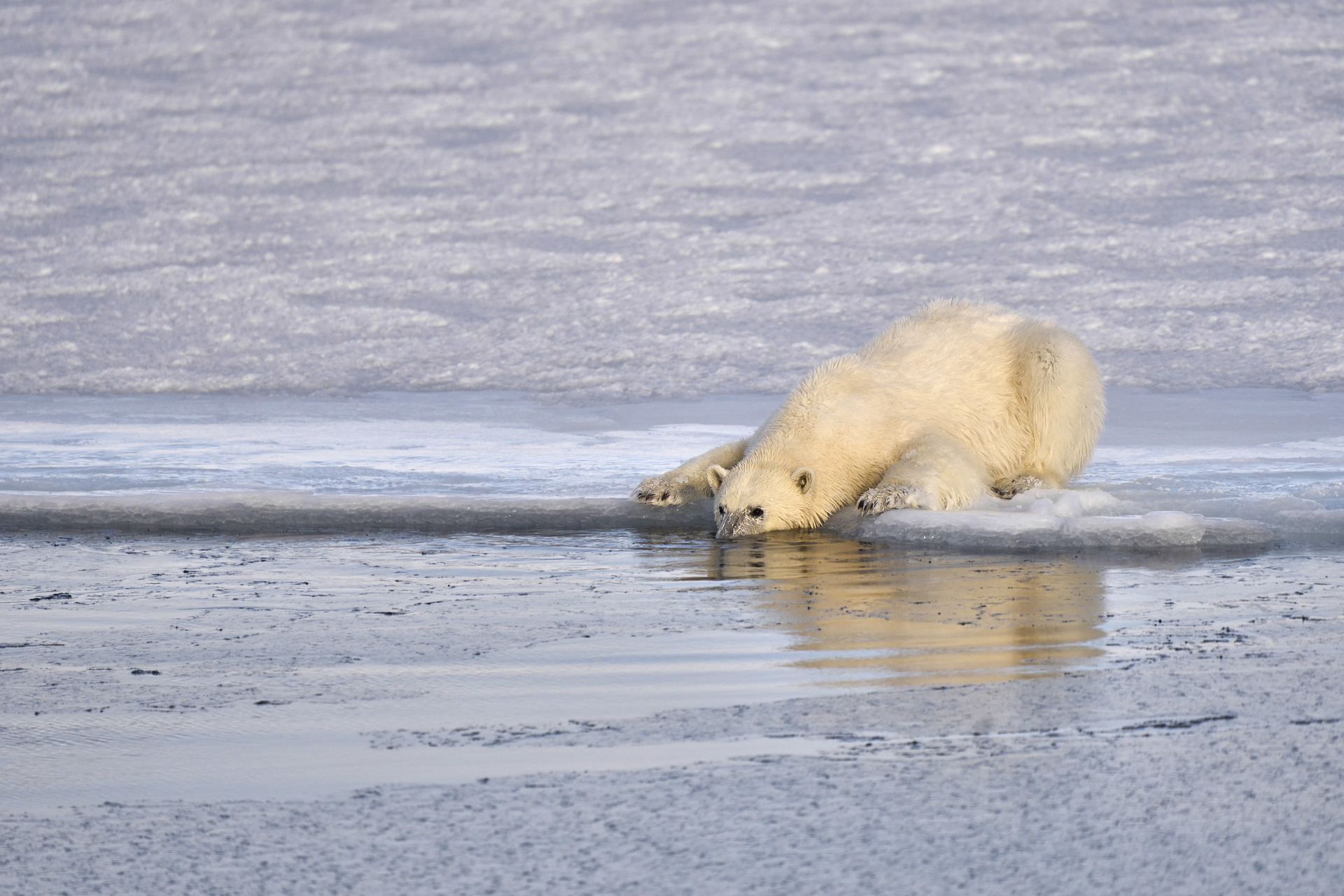
For Arturo, his most recent encounter with polar bears echoed one of his first and most pivotal shoots. “In May of 2024, I was leading a tour, and we spotted a bear on the ice,” he remembers. “Seeing that he was not alarmed or stressed by our presence, we stopped the engines and allowed the ship to slowly drift close to the pack ice, coming within 40 or 50 metres to photograph him. He was relaxed and it soon became apparent that he was playing with us and putting on a performance, rolling in the snow like a puppy, standing up on his hind legs, playing with the ice, splashing… It was an hour of pure joy.”
 © Arturo de Frías | Sony α1 + FE 200-600mm f/5.6-6.3 G OSS | 1/5000s @ f/6.3, ISO 1000
“It was a similar situation that made me realise the power of photography. In 2011, I took a photo of another polar bear, jumping in the pack ice. I was so moved by the picture that I thought, ‘this cannot remain on my computer, it needs to be seen by as many people as possible.’ That photo became the cover of my first book, and I’ve now published seven, from which all of the proceeds have gone into my foundation, Sustainable Development. It’s an organisation which concentrates on rural development, the protection of vulnerable people, and the conservation of our planet in the face of climate change.”
 © Arturo de Frías | Sony α1 + FE 200-600mm f/5.6-6.3 G OSS | 1/2000s @ f/6.3, ISO 400
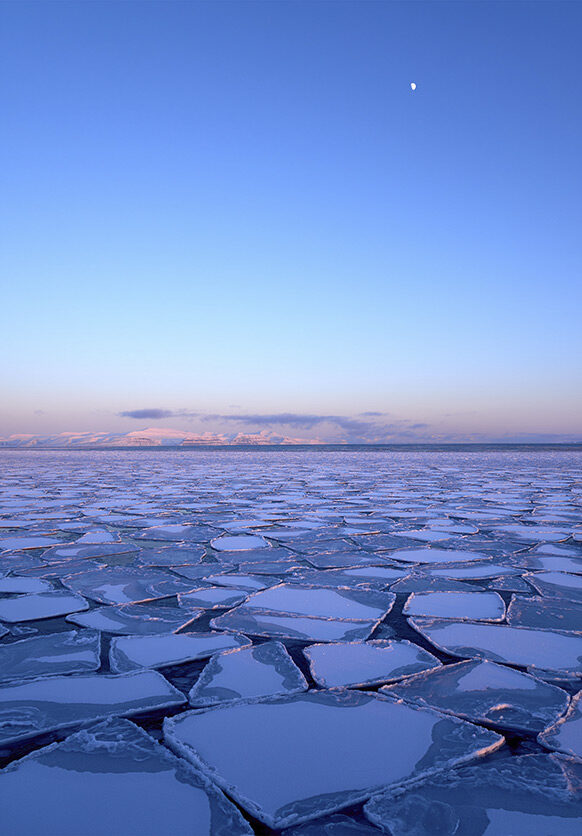
“Places like Svalbard really are ground zero for climate change,” Arturo continues. “It’s warming two to three times faster than the rest of the planet because of the loss of the albedo effect. That’s where the energy of the sun is reflected back into space by the land, but particularly by snow and ice. With the glaciers melting and the sea ice disappearing, there’s obviously less and less reflection, so the world gets warmer, and we lose more ice. It’s a vicious circle.”
Our opportunity to save the natural world is fleeting, Arturo says, and there’s a parallel in wildlife photography. The chances he has to make images that matter don’t stick around for long. “For that reason, I need the best photographic tools, and right now that’s the Sony Alpha 1 by far,” he explains. “For shots like those from Svalbard, I often use it with the FE 200-600mm G lens, which gives me a great range of framing options, excellent sharpness and low weight.”
 © Arturo de Frías | Sony α1 + FE 200-600mm f/5.6-6.3 G OSS | 1/5000s @ f/6.3, ISO 1000
“For me the most important thing in capturing these moments is the camera’s amazing AF system and speed,” he continues. “We go to these places, or underwater to capture majestic sharks and whales, and we hope for a great encounter. And although there’s a lot of effort and investment involved, in a week’s trip, there could be just a few seconds when everything is perfect. If the subject is close, and the light is right, you want the picture to be perfect. Before, in those split-second moments, I might get three or four shots out of 20 that were in focus, but with the Alpha 1 it’s 19 of 20 at least.”
Seeing the effects of climate change first hand has had a huge impact on Arturo. “Being in Svalbard is one of the most beautiful and most sobering experiences you can have on the planet. There you can see climate change happening in front of your eyes. I was there in April, after one of the coldest winters in the last 20 years and the huge Isfjord was completely frozen. But when I returned in May, the ice had all gone. It’s a chaotic, runaway situation, and the polar bears are caught in the middle.”
 © Arturo de Frías | Sony α1 + FE 200-600mm f/5.6-6.3 G OSS | 1/2500s @ f/6.3, ISO 800
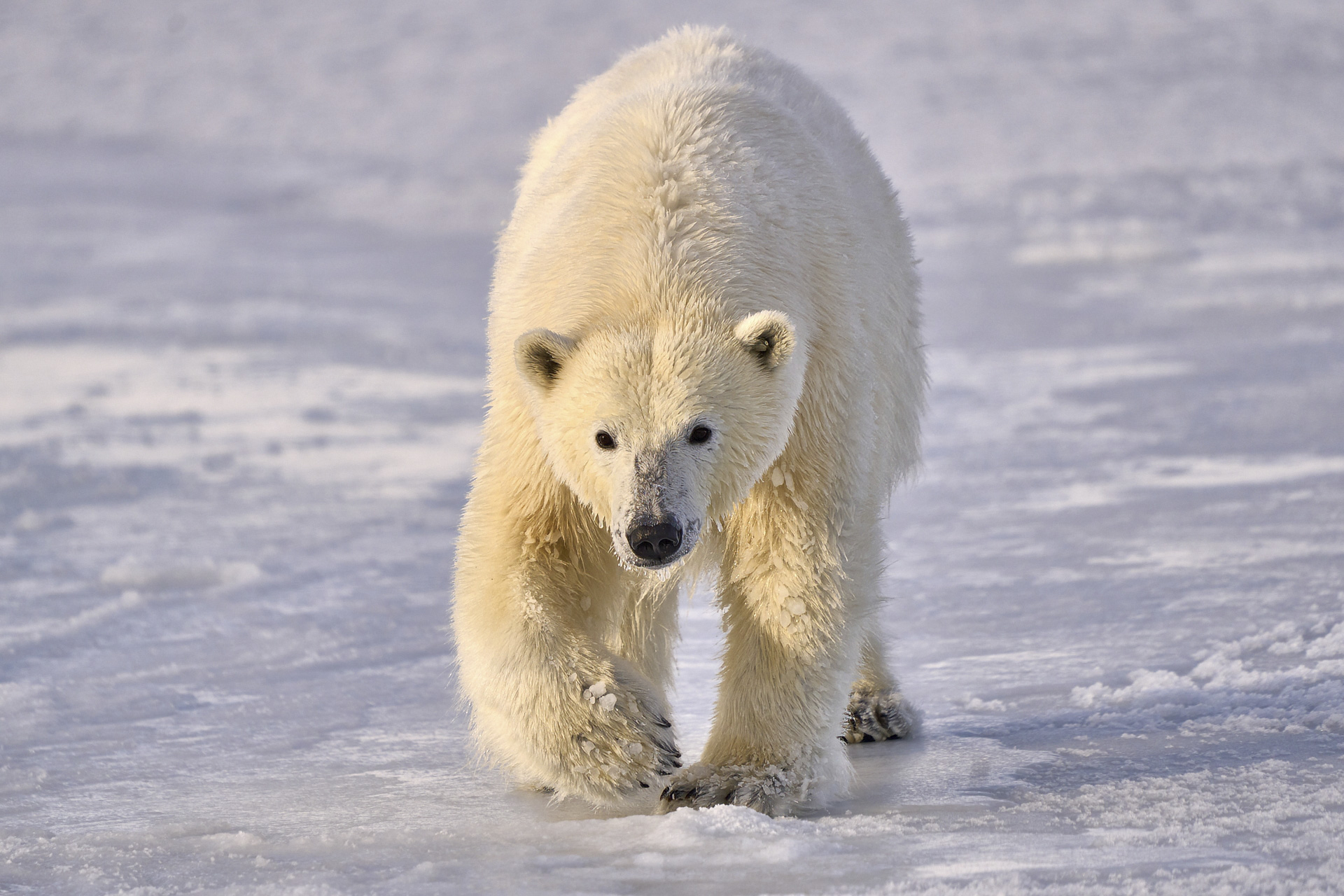
Polar bears are the poster child for climate change, Arturo says, and it's worth remembering why. “They are the biggest land predator on Earth, incredibly powerful and strong, but also supremely adapted to their environment and so their position is very delicate,” he explains “That is their weakness in a world that’s changing faster than they can keep up. It’s well known that hunting is becoming harder for them due to the shrinking sea ice, but climate change also affects how the female bears nurture their cubs.”
“They make their dens on the land and hibernate there in the autumn. Their cubs are born in the dens and then, in the Spring, they emerge. But with the sea ice drawing back north they have to travel further and further to feed. They’ve eaten nothing for months so the mothers need to kill a seal within a week or two, or they will starve, and then their cubs will starve, too. Right now, population numbers are stable, but if things continue, within a few years we know they’ll go off a cliff edge.”
 © Arturo de Frías | Sony α1 + FE 200-600mm f/5.6-6.3 G OSS | 1/2000s @ f/6.3, ISO 400
And the problem won't end with the loss of an iconic species, Arturo warns. “When the delicate balance is ruined, the ecosystem can collapse quickly and in ways we might not even be able to predict.” The value of photography in this is clear, he maintains. “Jacques Cousteau said that humans only protect what they love, and only love what they know. So, we can teach people through photography, show the beauty of nature, and get them to help protect what’s in peril.”
With the proceeds of his photography books raising hundreds of thousands of Euros and helping to launch restorative projects all around the world, Arturo hopes that more and more people can become custodians of nature like he has. “The thing is, kids always love nature when they’re young, but at some point, that fades and is forgotten. Photography can bring that fascination back, and when we understand that what we love is at risk, the sacrifices we need to make as a society in order to protect the world don’t seem so bad.”