
Steady Progress
Drew Webb
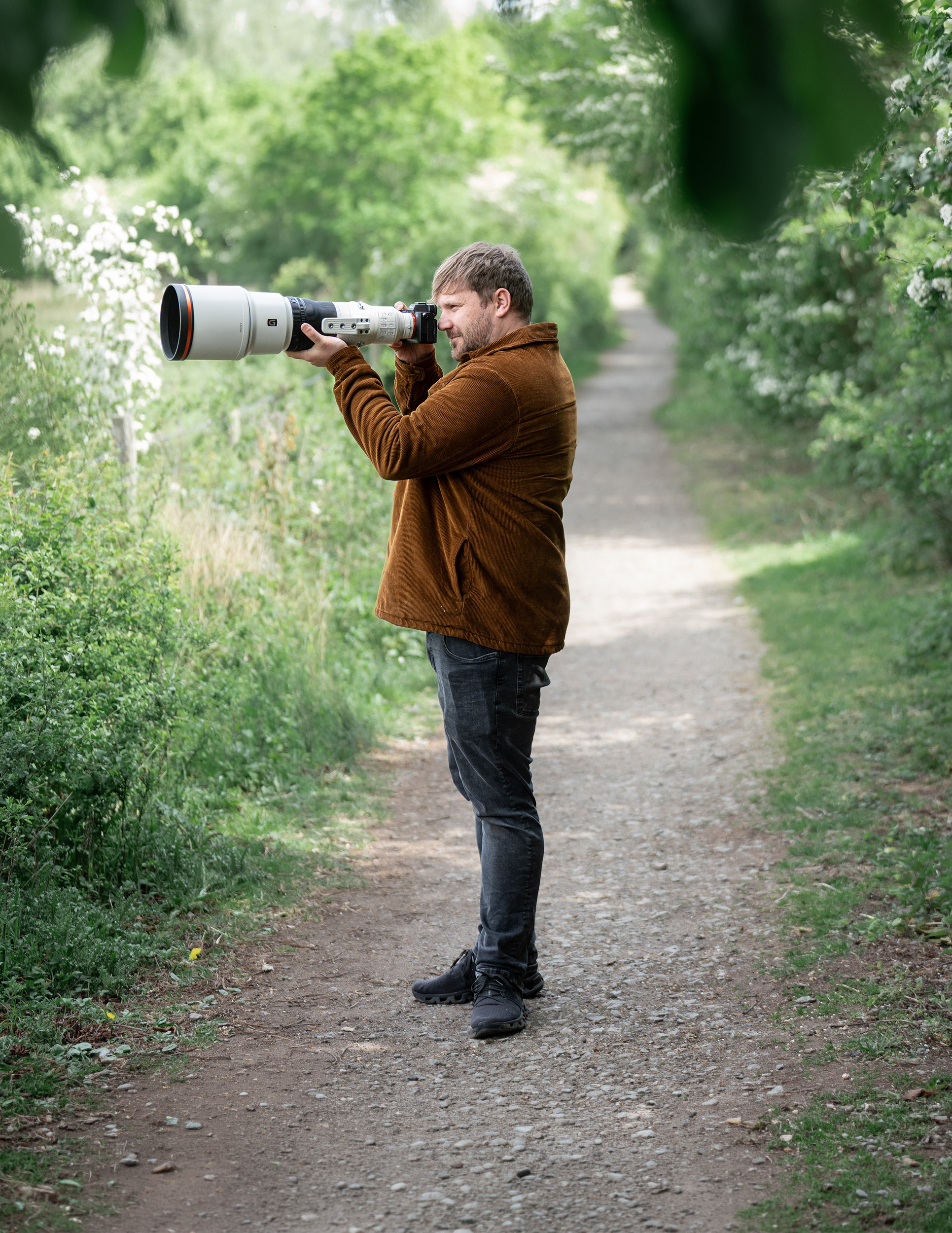
Running north from Flamborough Head towards Filey, the coastline around Bempton Cliffs is one of the UK’s most spectacular. It’s also home to thriving populations of sea birds. But with the precipitous chalk cliffs rising to over 100m in places, the combination of north-sea wind and vertigo means it’s not necessarily easy to hold your camera still enough to shoot them.
 © Drew Webb
Expert wildlife photographer Drew Webb knows all about battling camera shake. He has been visiting these cliffs for years, along with other wild spots around the UK, photographing their residents with beautiful clarity. But for Drew the shake is more than just environmental, and more than most people experience with holding long lenses.
“I have a condition called a benign essential tremor and I got the diagnosis when I was about 10,” he begins. “It causes involuntary shaking in my hands and arms, which obviously makes holding a camera still enough to get a sharp shot quite difficult.”
Drew’s interest in photography and wildlife started on trips to Scotland where he saw ospreys and took pictures out of the car window with his grandad’s old Kodak Retinette, but it took some time for the seed to germinate. “As you can imagine, that’s not a great camera for distant birds of prey, and though I loved using it, I never thought you could do photography as a career. I took my GCSEs, did a terrible job, left school and didn’t really know what to do.”
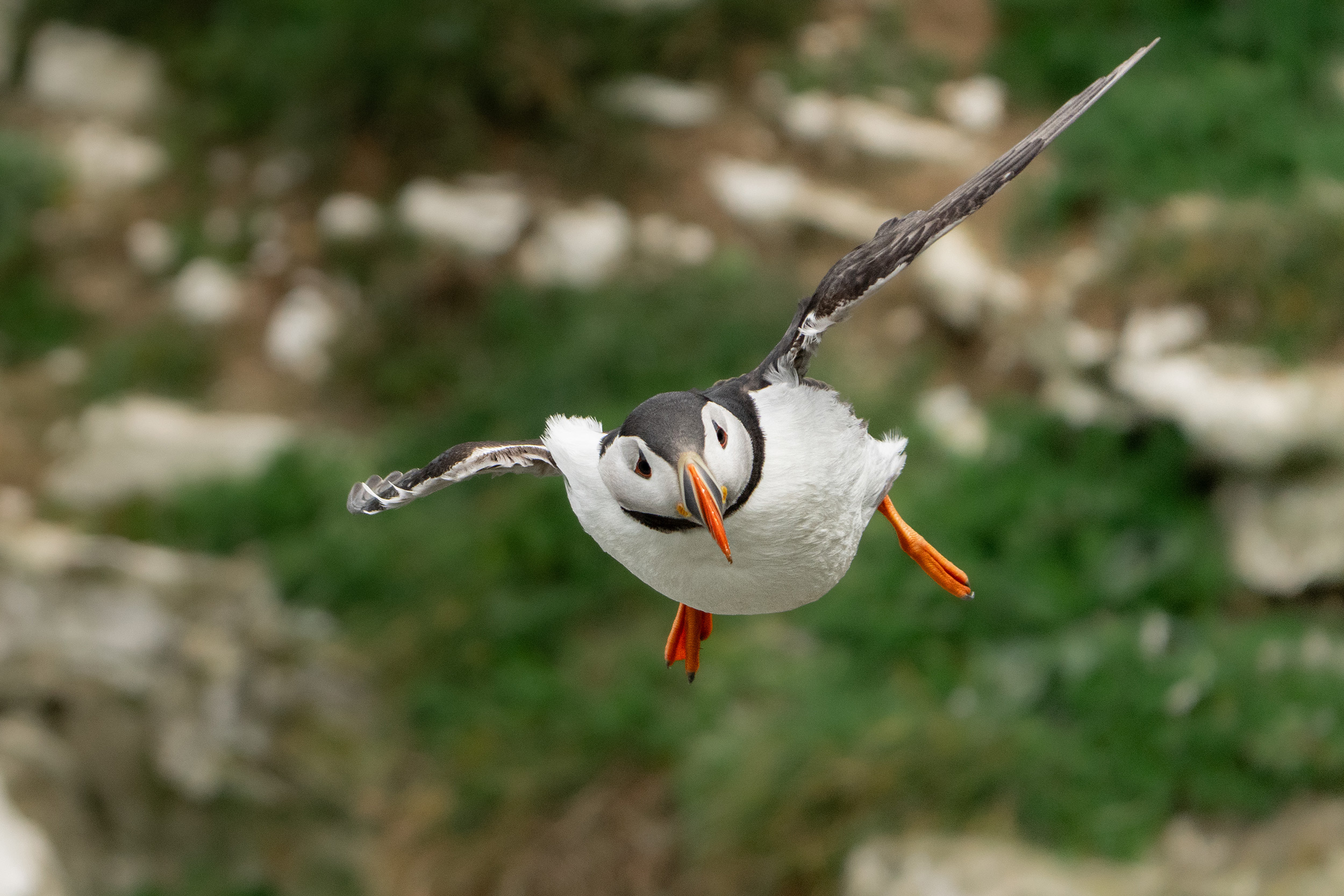 © Drew Webb | Sony α7 V + FE 400-800mm f/6.3-8 G OSS | 1/2500s @ f/8.0, ISO 1250
“I took a year out, then did a media course and followed by a BTEC and then a degree in photography. It was during that time, I first noticed how the tremor affected my shooting. We were doing an exercise to see how slow we could hand-hold our cameras and with a 50mm lens I got down to 1/125sec. I was proud of that, but the next day I noticed everyone else was at 1/50sec or even below.”
That exercise demonstrates the ‘reciprocal rule,’ a simple equation that says to avoid motion blur in a photo your shutter speed will probably need to be at least the reciprocal of the focal length you’re using. For example, shooting at 50mm you should be looking at a shutter speed of around 1/50sec as a minimum.
Then, while working at a camera store, someone noticed his tremors. “I was packing a box for a customer who turned out to be a doctor and he asked me how long I’d been in recovery! He thought the tremors were me going ‘cold turkey,’ and it was the first time as an adult I understood that other people could see this.” Along with the realisation that many of his telephoto images were coming out blurred, for Drew it was the start of fully accepting his condition.
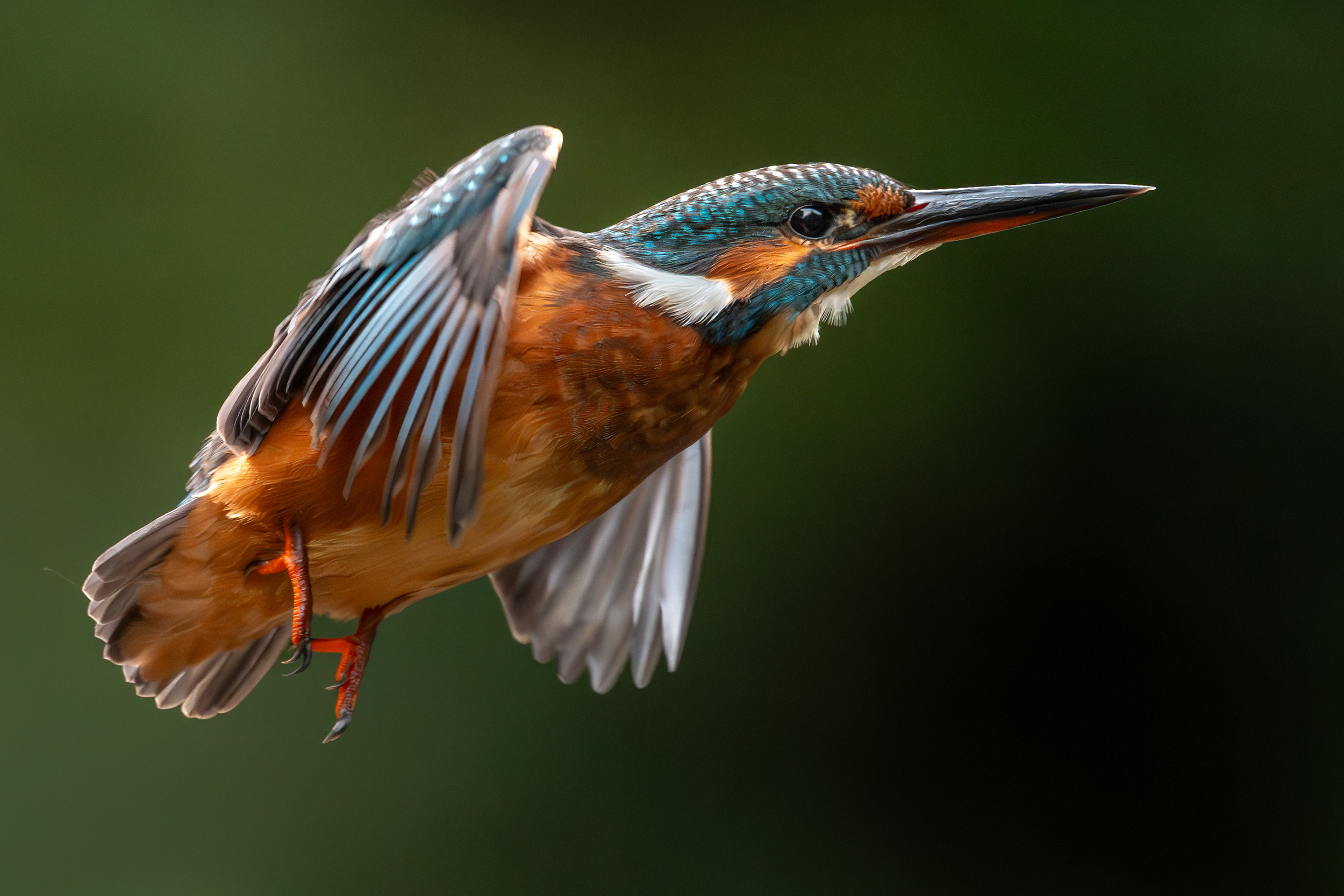 © Drew Webb | Sony α7 V + FE 200-600mm f/5.6-6.3 G OSS | 1/5000s @ f/6.3, ISO 1600
“The thing is,” he continues, “up to that point, despite the evidence, I’d convinced myself psychologically that the tremors didn’t exist or excuse myself from situations where they were a problem. In that way, I decided I just wouldn’t work at long focal lengths and instead stick to more forgiving ones like 35mm and 50mm.”
But during the Covid-19 lockdowns he rediscovered his interest in wildlife and along with it a determination not to let the tremors hold him back. “When we were allowed out for walks I’d take my 70-200mm to the local duck pond and do what I could with it, but as all wildlife photographers know, you always want more and more focal length, so from them on, I started doing everything I could to produce better images at longer focal lengths.”
In practice, more stable shooting for Drew usually means working from a tripod, as well as using trees, hide windows, beanbags, or the ground for stability. “There’s loads of things I do, such as laying down like a sniper,” he laughs, “a friend in the US Army recommended it, as it’s a braced position which gives a lot more steadiness. I can improve the tremors, but never remove them. It’s especially noticeable with video.”
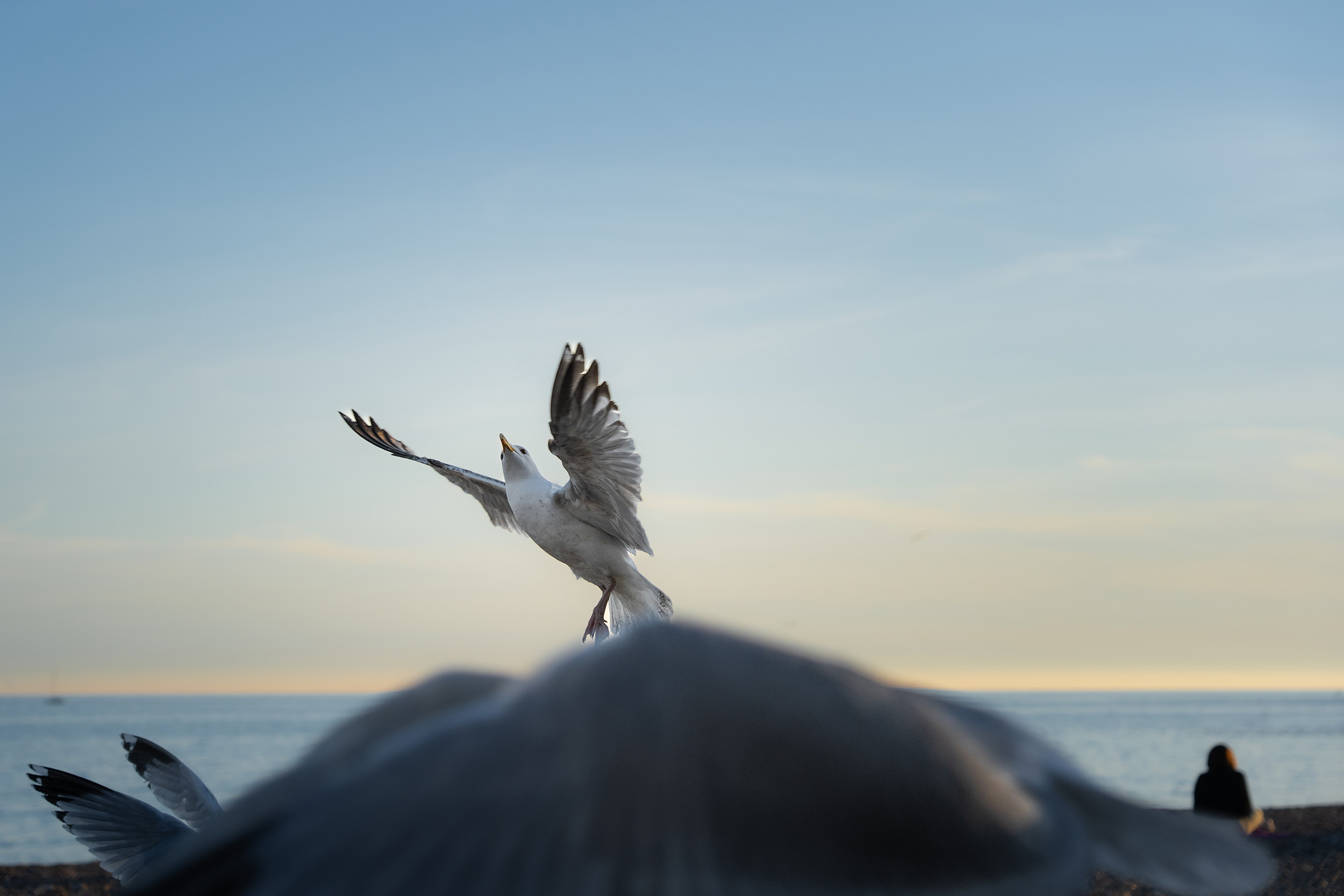 © Drew Webb | Sony α7 V + FE 24-105mm f/4 G OSS | 1/400s @ f/8.0, ISO 800
Of course, Drew’s Sony gear has ways of helping, too, like Steady Shot optical stabilisation in lenses and Steady Shot Inside sensor-based systems in camera bodies. “Because of my condition I can’t use anything that doesn’t have image stabilisation (IS),” he says. “I looked around at what brands had good IS features and Sony’s were a big reason I got into the Alpha system.”
“There are different recipes I use, depending on what and how I’m shooting,” he continues. “For instance, using the Active Steady Shot Inside mode along with the optical stabilisers of certain lenses can add a funny ‘jitter’ especially when you’re on a tripod, as though the modes are fighting one another. So in those cases, I just turn off one or the other. But if I’m shooting handheld, it’s all on!”
IS can also aid composition as it gives a steadier view when framing, while the excellent image quality of his cameras at higher ISOs means Drew can push shutter speeds as high as he needs them. “I’m currently using the Alpha 7 V, and the Bird Tracking AF means I rarely need to touch the lens, which is important, because the tremors mean it’s like I’m hitting it with a little hammer! The 30MP resolution is perfect for me. The bigger pixels naturally show less micro blur than would be seen on a higher resolution sensor, and because I shoot in bursts to maximise the chances of a sharp shot, it’s easier for workflow, too.”
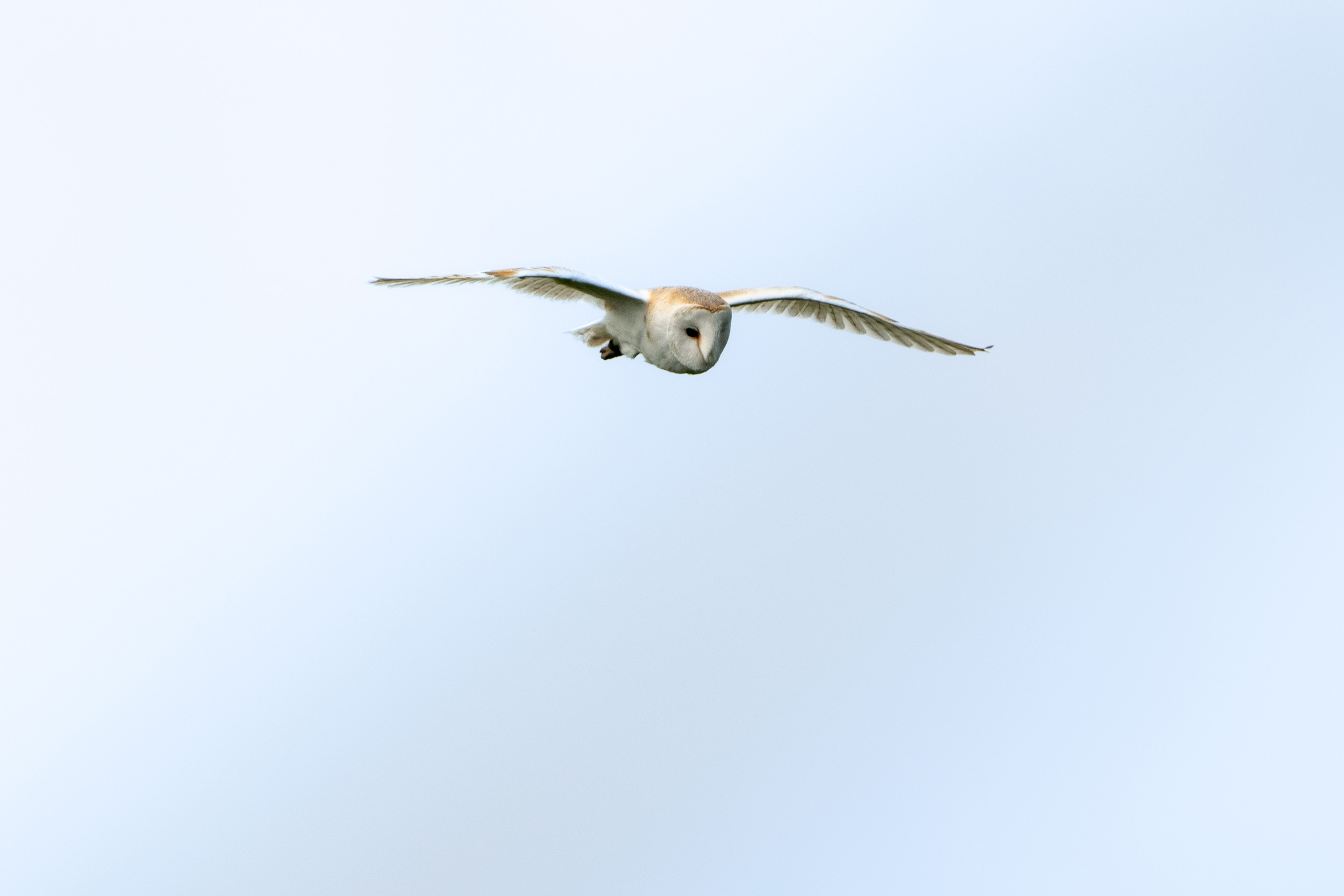 © Drew Webb | Sony α7 V + FE 400-800mm f/6.3-8 G OSS | 1/1000s @ f/8.0, ISO 500
Using zooms also helps Drew, initially framing wider to locate subjects and then zooming in to fill the frame. It’s for that reason he loves the FE 200-600mm f/5.6-6.3 G OSS, but true to his desire to do more, he chose different lenses for his latest trip to Bempton. “I’d say 400mm is the point at which I’m comfortable getting shake-free shots, but as I’m always trying to extend what I can do, I took a FE 400-800mm f/6.3-8 G OSS and FE 600mm f/4 GM OSS, both dream lenses for me and ones I had to push my skills to make the most of.”
Drew’s tenacity in dealing with his tremor has also seen his approach to guiding other photographers evolve. “My experience has taught me that the simple pleasure of being out shooting with friends or finding a special moment in nature is a lot more important than the technical side of things,” he finishes.
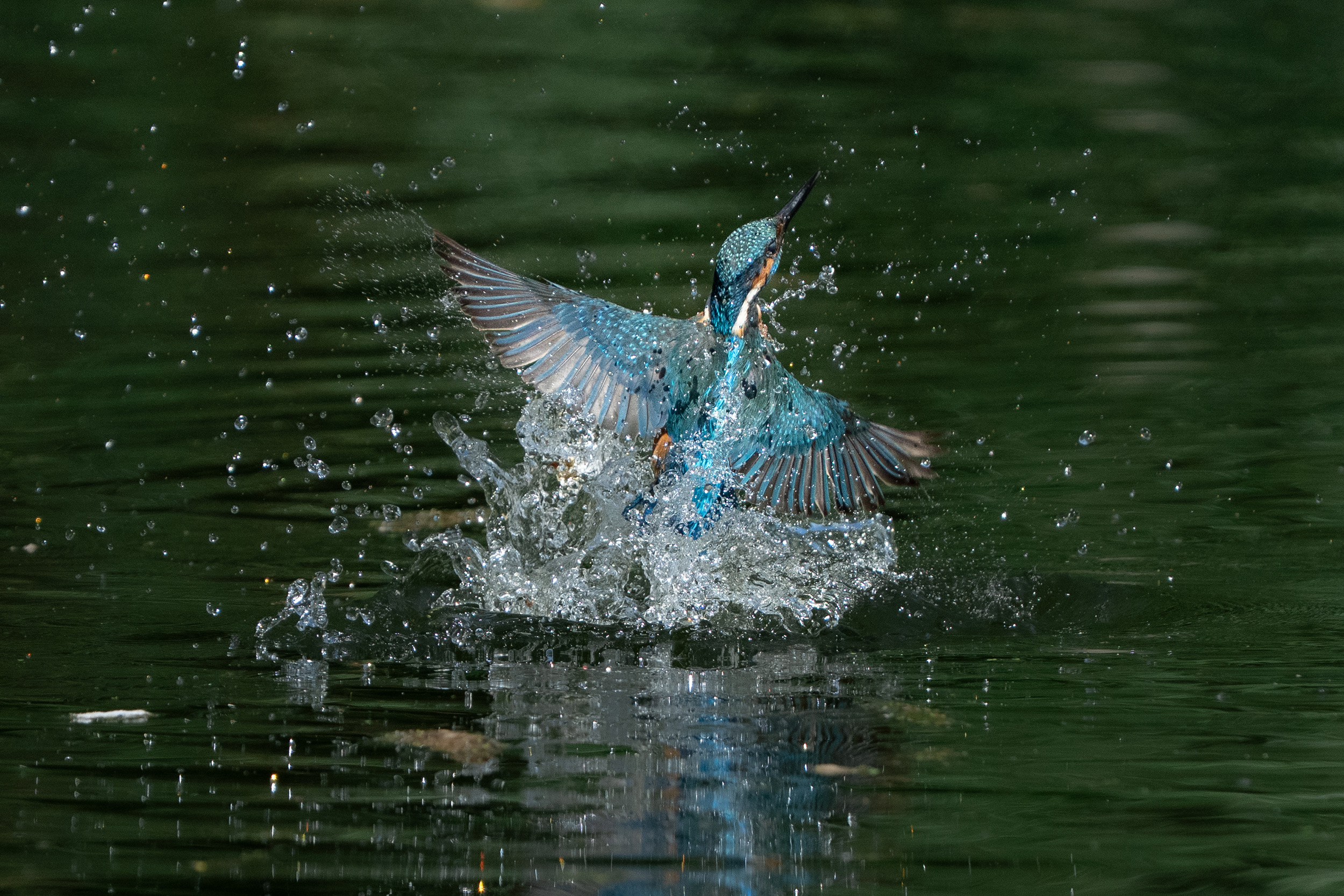 © Drew Webb | Sony α7 V + FE 200-600mm f/5.6-6.3 G OSS | 1/5000s @ f/6.3, ISO 1600
“Through my photos and videos I want to show that photography can be truly accessible and genuinely uplifting to all sorts of people. I want to show what’s great about the experience whether you get the shot you want or not! Some of the best trips I’ve had have been a struggle. I wish I could tell my 18-year-old self some of these things. Life seemed foggy and uncertain then, but that’s because I was fighting against limitations, rather than learning how to succeed with them.”


