
Photography Below Freezing
Liam Man
The mountains of Swedish Lapland can be a hostile place, with temperatures recorded as low as -40º Celsius. But for Liam Man (Sony Europe Imaging Creator), the prospect of capturing the harsh, yet hauntingly beautiful landscape, still held an irresistible allure. Liam led an expedition with Sony creators Olivier Groot and Magnus Winbjörk into this winter wonderland, in search of arctic landscapes.
To document the expedition, I planned to both photograph and film the environment. For this hybrid style of shooting, I packed my Alpha 7 IV and Alpha 7S III paired with the 24-70mm f/2.8 GM II and FE 70-200mm f/2.8 GM OSS II.
There was the possibility of catching the Aurora Borealis so I brought two fast, wide-angle prime lenses; the FE 14mm f/1.8 GM and FE 20mm f/1.8 G. Both are excellent for low light conditions as they capture so much light. In case of wildlife opportunities, I went with the compact yet versatile FE 200-600mm f/5.6-6.3 G OSS. For audio, I went with the ECM-B1M shotgun and ECM-W2BT wireless microphones.
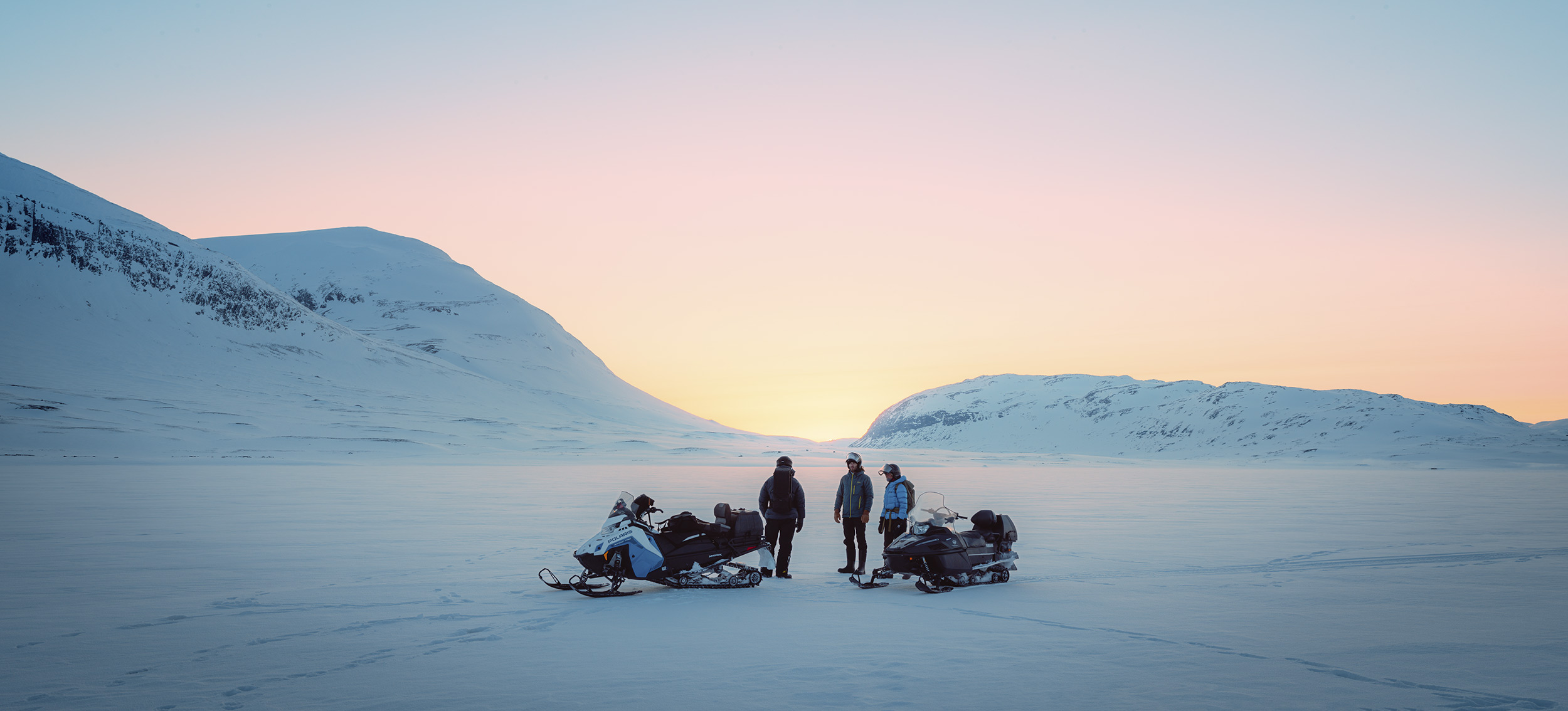 © Liam Man | Sony α7 IV + FE 70-200mm f/2.8 GM OSS II | 1/50s @ f/13, ISO 200
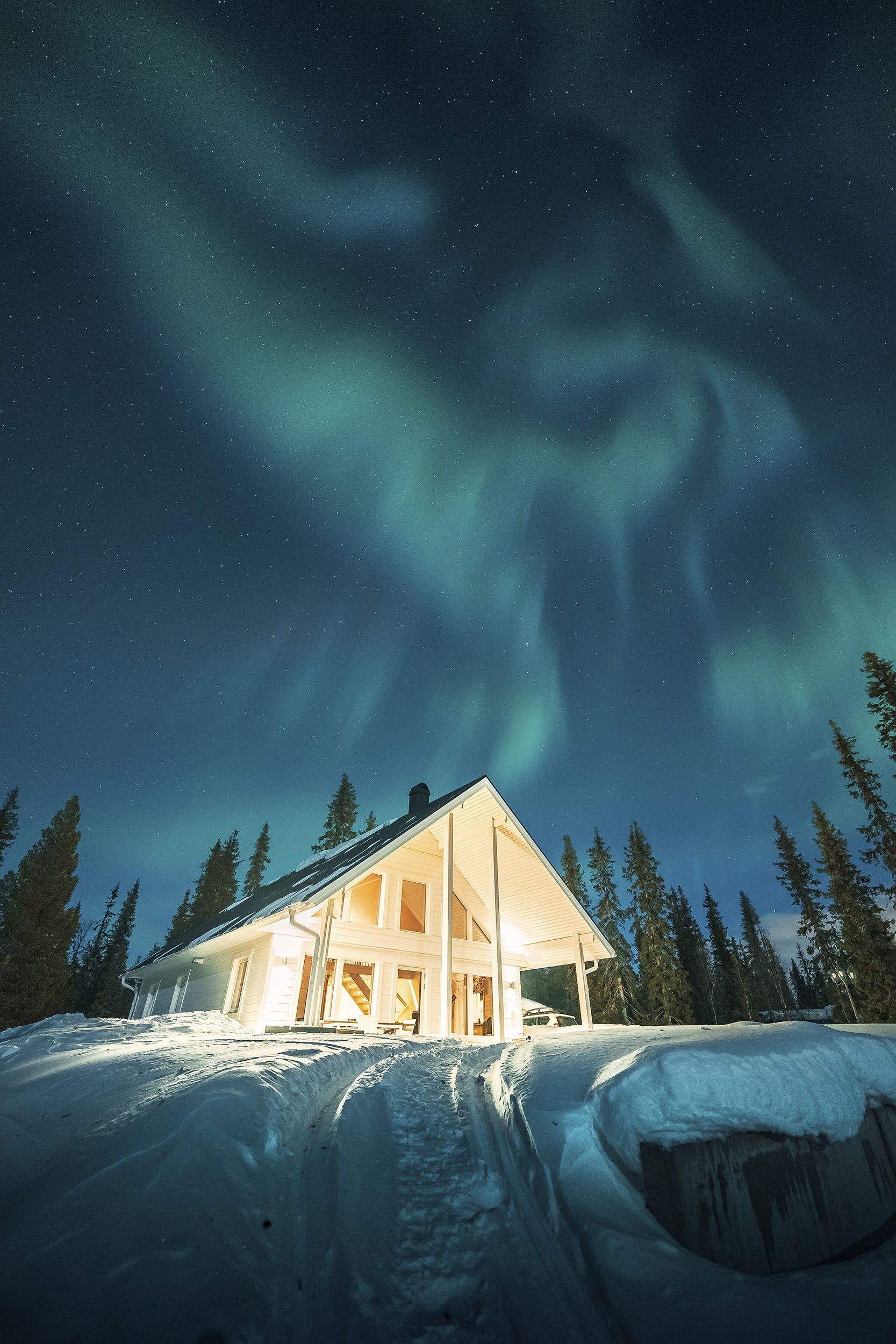 © Liam Man | Sony α7 IV + FE 14mm f/1.8 GM | 1s @ f/1.8, ISO 1600
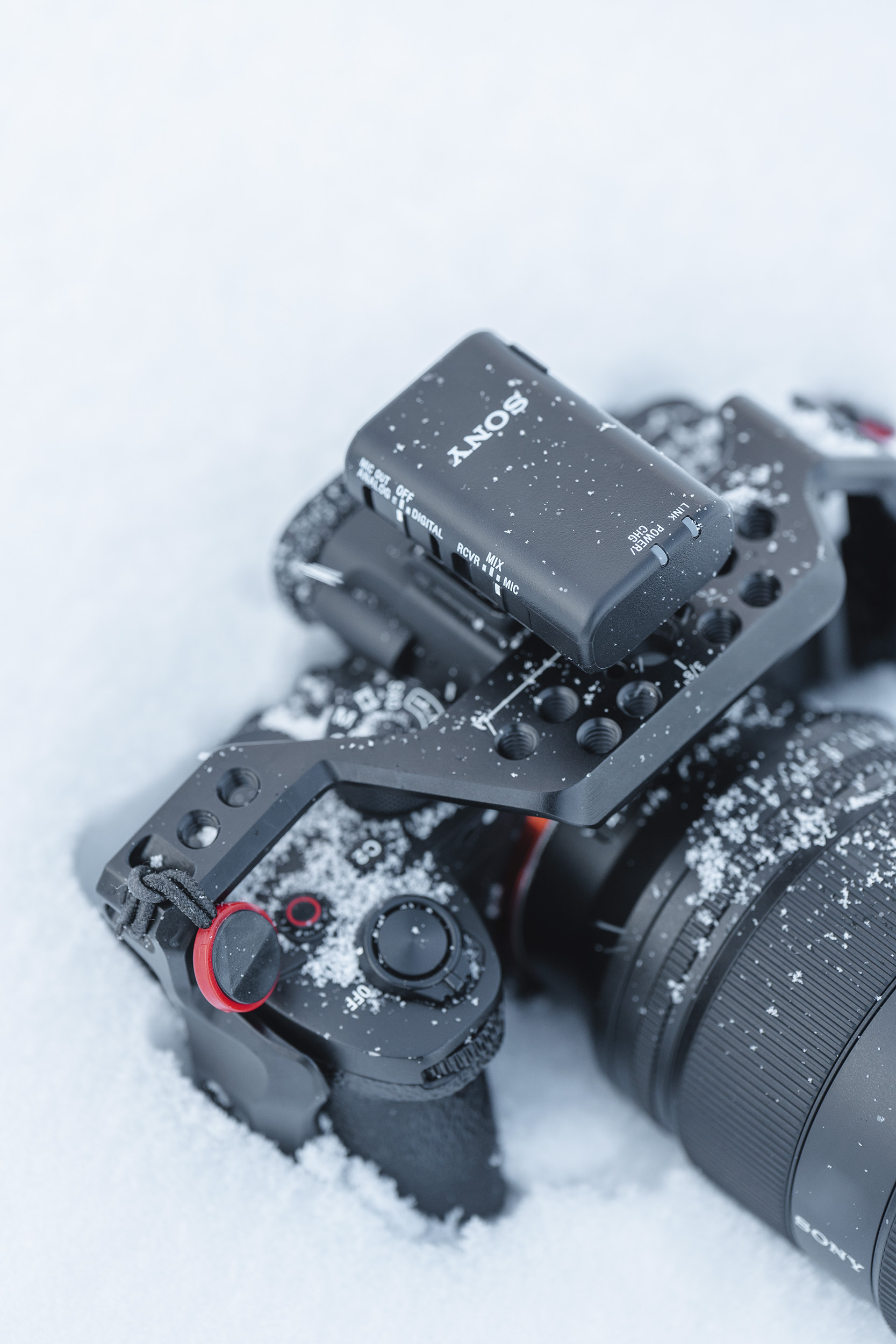
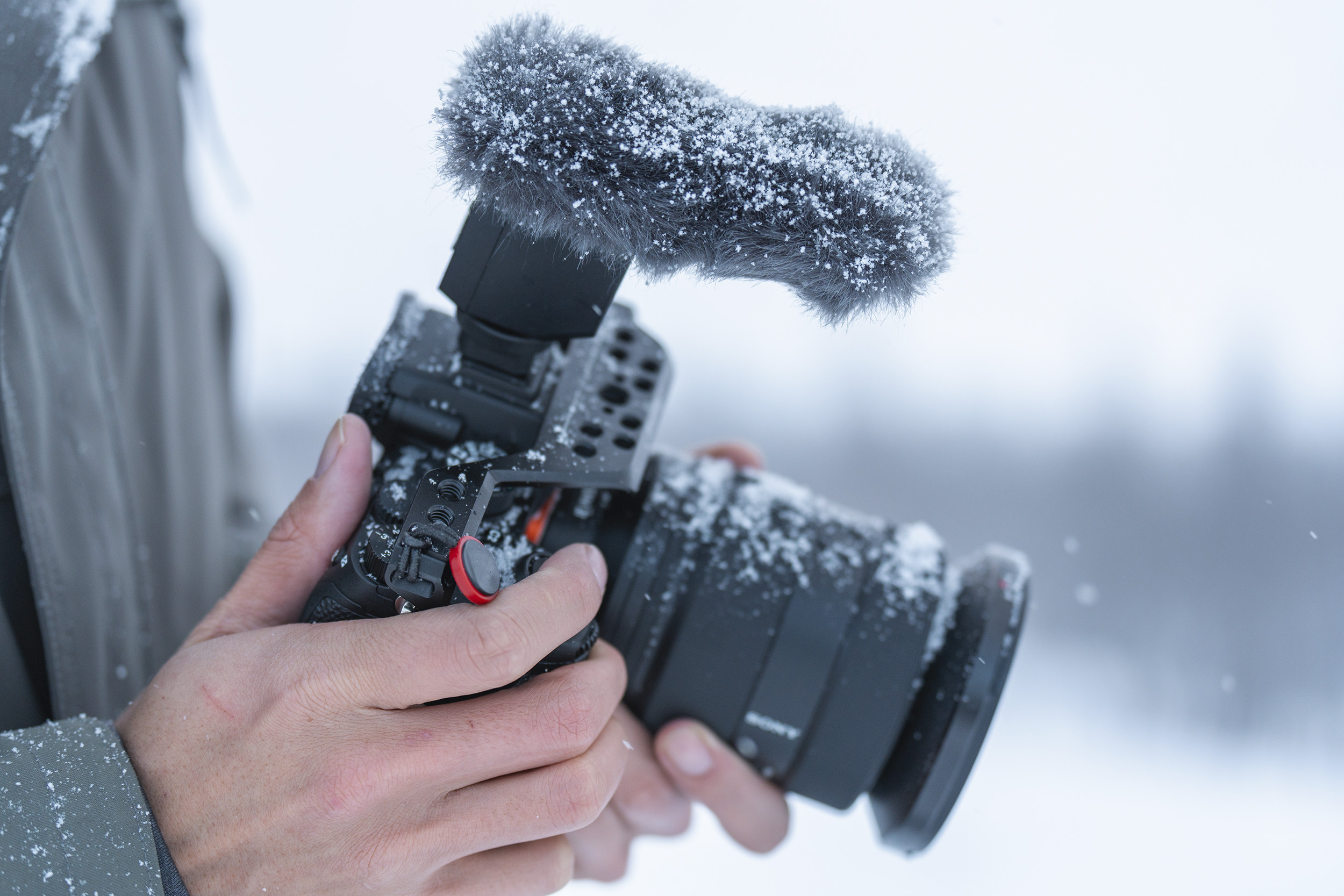
The two microphones that I used had very different strengths. The ECM-B1M shotgun microphone connects to the multi-interface mount on top of the camera, and excels at picking up directional sounds, great for capturing B-roll of us moving around the environment along with the voiceover work.
The ECM-W2BT is a wireless microphone and includes a receiver and transmitter. The receiver mounts to the camera hotshoe, while the transmitter can be placed anywhere you want, whether that is clipped to the on-screen talent or someplace far away from the camera. This ECM-W2BT was the microphone that I used when recording the intro to the main video, as we rode snowmobiles across the frozen lakes.
By attaching the ECM-LV1 lavalier microphone to the input of the ECM-W2BT transmitter and clipping it to my jacket, I could shield the microphone from direct wind using my helmet. This let me record clean audio without picking up the incredibly loud engine and wind noise.”
 © Liam Man
 © Liam Man
What was your impression of these microphones?
My first impressions of both these microphones were just how easy they were to use. No wires, just clip them onto the multi-interface shoe and start recording. I really enjoyed how they both record a digital signal that auto balances the audio levels, I could just trust that the microphones wouldn’t clip. When you’re shooting with thick winter gloves, the last thing you want to do is take them off just to change the audio settings.
I found the audio quality to be excellent, the ECM-B1M shotgun microphone did a great job in isolating directional sounds and being able to switch between super-directional, unidirectional, and omnidirectional modes made it a versatile tool. I love the depth and richness to the audio that the shotgun microphone captured, as we revved our snowmobile engines at the start of the video.
The ECM-W2BT recorder is such a small unit, so I was worried about the battery life, especially in the sub-zero temperatures. But thankfully I got days of use per charge and only needed to charge it once during the trip. With automatic pairing and the receiver powered by the camera, it was the most stress-free audio setup I have used. The expandability via the 3.5mm stereo mini-jack on the transmitter just adds to the capabilities of the gear and plugging in the ECM-LV1 lavalier microphone got me that professional audio that I was looking for.
Is the weather in the Arctic Circle really as extreme as people say?
The trip didn’t go 100% to plan and a severe weather front rolled in. With heavy snow each day and mercury dropping well below zero, the success of the expedition hung in the balance.
Whilst -35º sounds cold - and it is - I am a believer in ‘there’s no such thing as bad weather, just unsuitable clothing’. A warm jacket, insulated trousers and thick gloves go a long way to surviving the conditions. It was so cold that my skin would freeze to the camera. Sometimes I would intentionally leave my camera gear outside (covered) overnight. The worst thing is to bring lenses inside a warm cabin, the moisture in the air instantly fogs up the glass and it freezes solid.
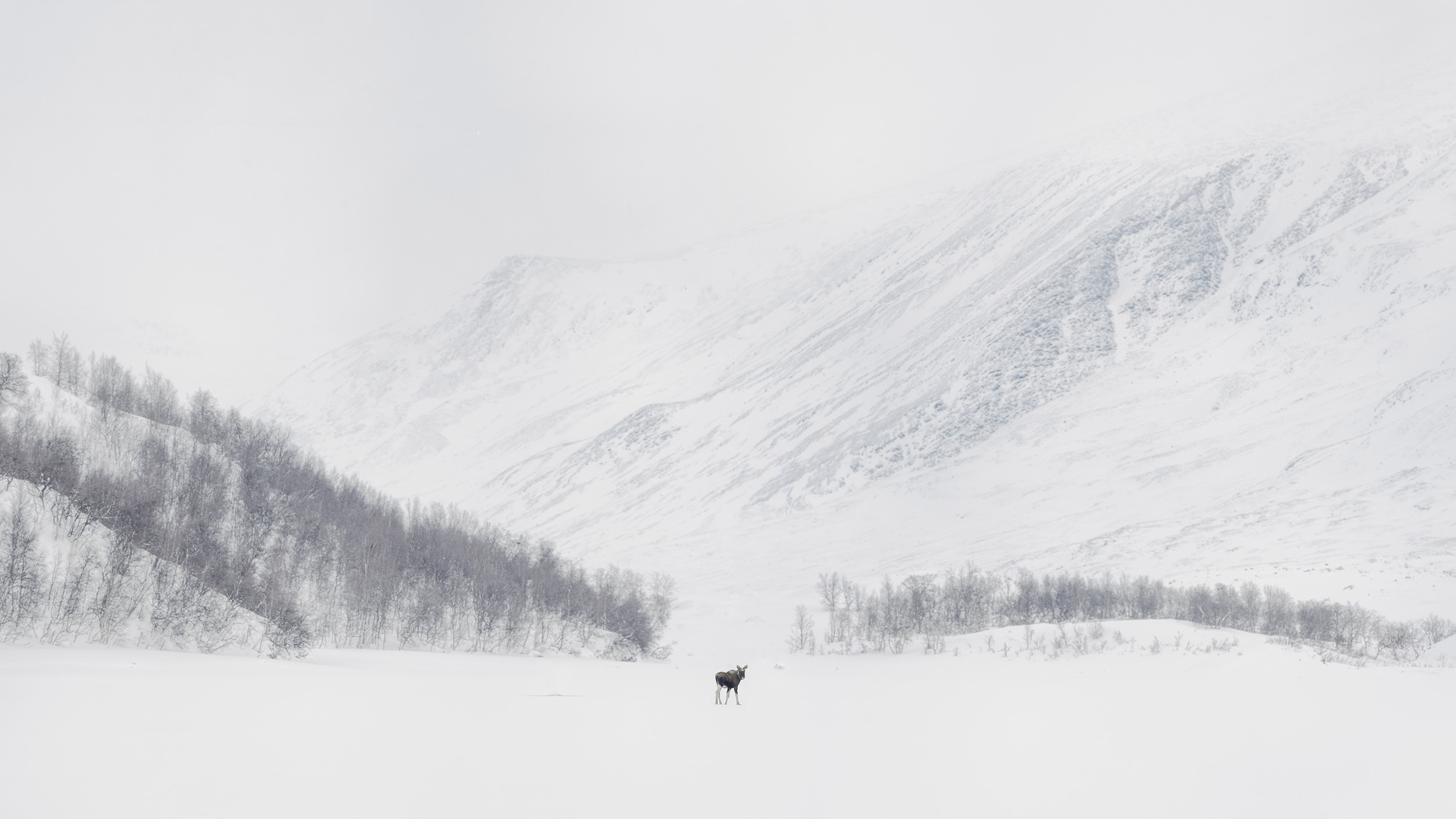 © Liam Man | Sony α7 IV + FE 200-600mm f/5.6-6.3 G OSS | 1/800s @ f/6.3, ISO 640
How did you adjust to the conditions?
The main issue was visibility. It was a whiteout with zero identifying objects and 10 metre high cliffs so it was impossible to go deeper into the mountain ranges. Instead, we spent our time scouting a nearly frozen lake for interesting compositions for when the weather cleared. This is an important strategy for all outdoor photography, always prepare for the perfect moments, especially if conditions aren’t ideal.
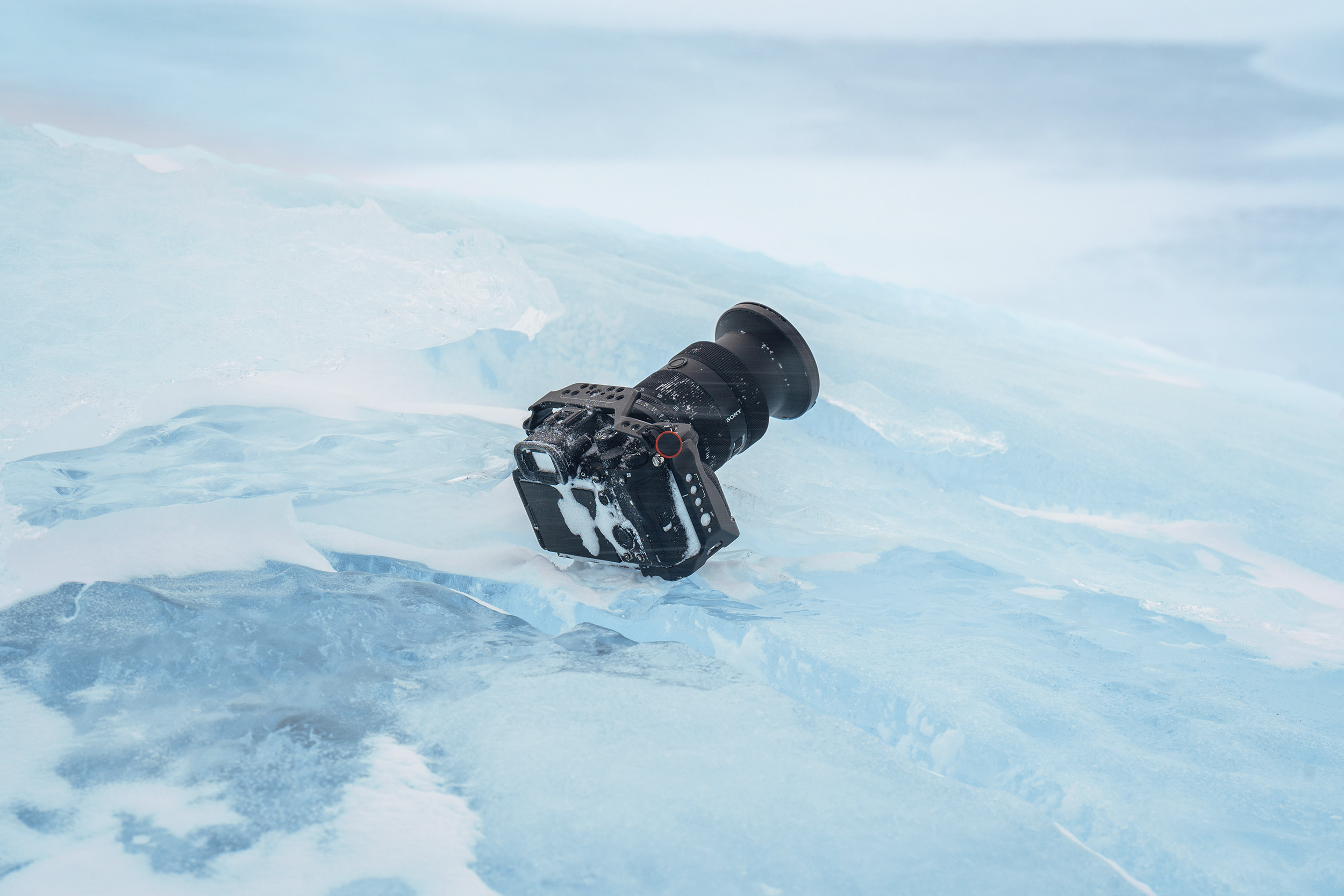 © Liam Man
After 5 days of stormy weather, not only did the weather forecast clear, but the solar activity spiked, increasing the chances of the aurora borealis. “It was amazing the difference a few degrees made. We were standing on this frozen lake and there wasn’t a breath of air in the wind. You could hear the ice creaking and cracking as the temperature changed. It surprised me that the sound was exactly the same as a car door slamming shut.
We all had our cameras pointing at Áhkká, Sweden’s highest base-to-summit mountain, just hoping that the northern lights would appear. We would need a miracle as the angle we were facing was Southeast (typically the lights are strongest to the Northwest). To increase my chances of capturing the aurora in frame, I used the 20mm F1.8 G lens. It’s wide enough to cover a wide area of the sky, and also allowed me to reduce my ISO and get the cleanest image possible. Suddenly you could see a faint green line stretching across the sky. Then it burst into life and green flames licked across the stars. It was a truly once in a lifetime moment that I will never forget!
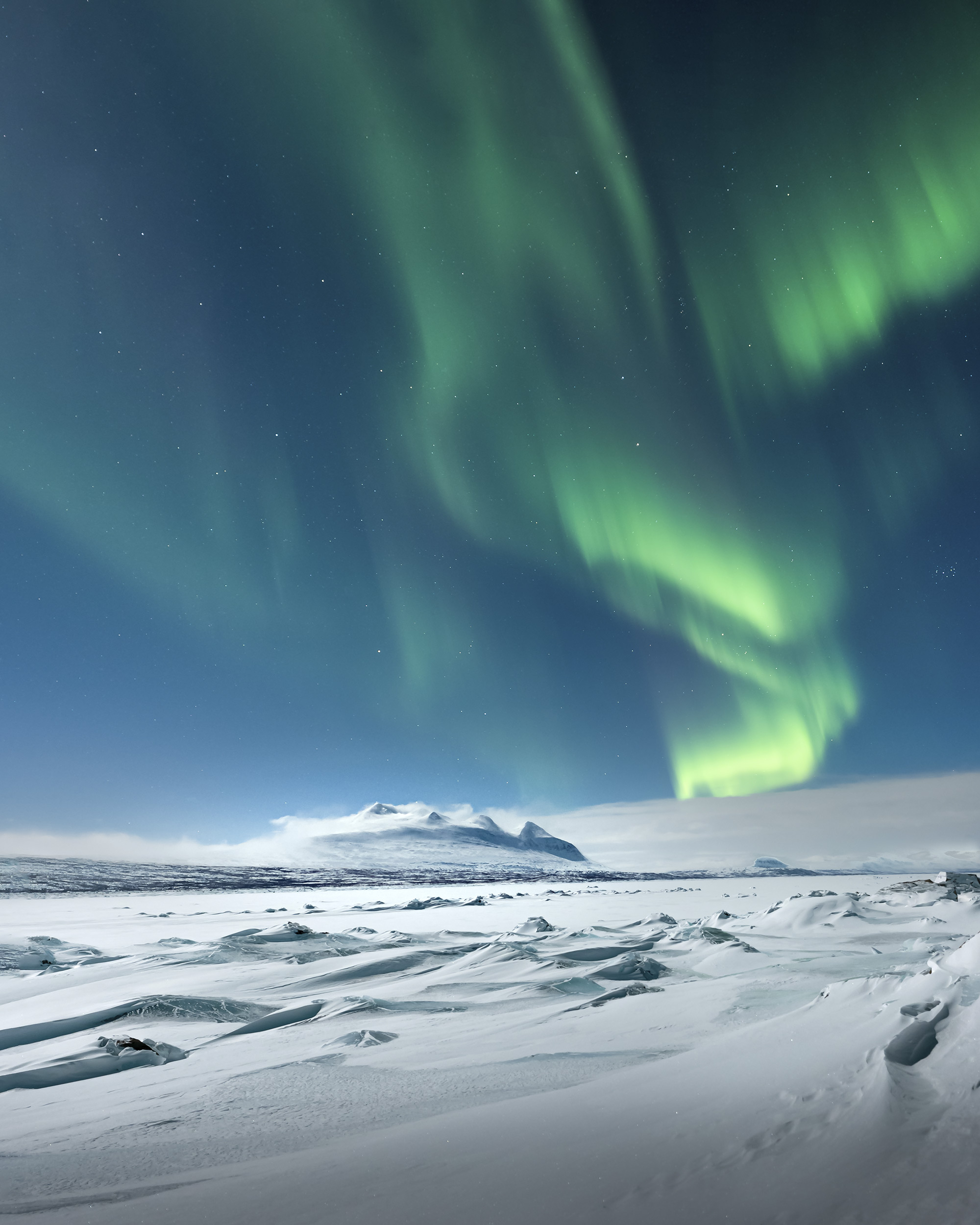 © Liam Man | Sony α7 IV + FE 20mm f/1.8 G | 5s @ f/1.8, ISO 400
Looking back at the journey, we didn’t manage to complete much of what we had set out to do. 5 days out of 8 were hampered by the weather, and I am extremely proud in the team for never giving up, continually doing whatever we could to maximise our chances of success. Having gear that we could depend on, when we needed it most was essential and the hybrid functionality of the cameras made recording video and shooting stills possible in the short time that we had.
Featured products


Liam Man | UK
Liam Man is a UK based image creator and travel photographer


